
TL;DR: Most SMBs blog without knowing whether it pays — mistaking vanity metrics like pageviews and likes for real return. This guide gives South African businesses eight metrics that actually connect content to leads, sales and ROI in 2026, so you can tell whether the blog is working or quietly wasting money. Blogging is an investment; track it like one.
Measuring Blog ROI—and How You Can Fix It
Let’s be honest—most small and midsize businesses are producing blog content without truly understanding what they’re getting in return. They’re posting regularly, maybe even seeing some traffic, but they have no idea whether that traffic is converting, generating leads, or impacting the bottom line. That’s a problem.
What’s worse? Many SMBs confuse vanity metrics—like pageviews or social likes—with meaningful ROI. They might see a spike in traffic after posting a blog, but they can’t answer the million-dollar question: “Is this blog driving business results?”
That’s where this guide comes in. If you’re tired of guessing whether your blog is “working,” you’re in the right place. We’ll walk you through the exact content marketing metrics you need to monitor to measure success, and more importantly, how to connect those numbers to real business growth.
Whether you’re a local service provider, a SaaS startup, or a B2B consultancy, understanding your blog’s performance is essential for sustainable marketing. This isn’t about fluff—it’s about leads, sales, and ROI.
Why Content Marketing Metrics Matter for SMBs
Blogging isn’t cheap. Whether you’re outsourcing content creation, using internal resources, or spending hours writing yourself, it’s an investment. And like any good investment, it should deliver measurable returns. That’s why understanding your content marketing metrics isn’t optional—it’s mission-critical.
When SMBs don’t track the right data, three things usually happen:
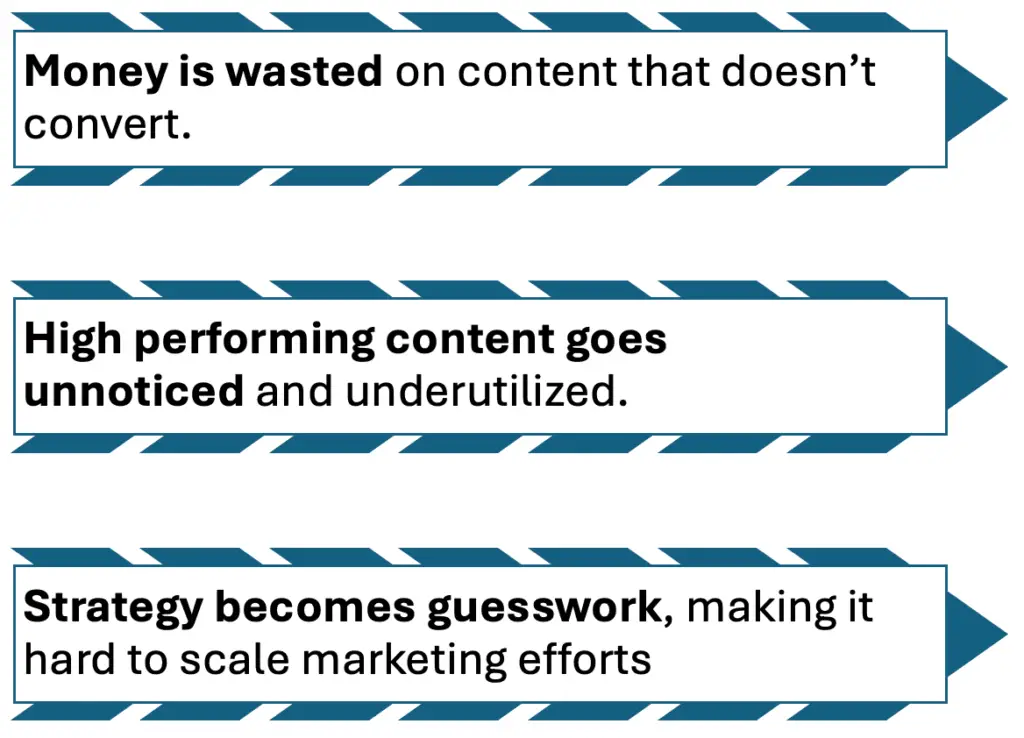
- Money is wasted on content that doesn’t convert.
- High-performing content goes unnoticed and underutilized.
- Strategy becomes guesswork, making it hard to scale marketing efforts.
This is especially true in today’s competitive environment. Content saturation is real, and simply publishing a blog isn’t enough. You need to understand what’s working, what’s not, and why—so you can double down on what drives results.
According to HubSpot, over 60% of marketers struggle to prove the ROI of their content marketing. For SMBs working with limited resources, this challenge is even more critical. Every piece of content should earn its keep—either by bringing in leads, nurturing prospects, or positioning your brand as the go-to expert.
When you start tracking content performance correctly, you gain more than insight—you gain control. You can make smarter decisions, get buy-in from stakeholders, and finally align your content with your business goals.
Top Content Marketing Metrics That Actually Matter
It’s easy to get lost in the sea of content metrics. Pageviews, bounce rate, backlinks, scroll depth—it can feel overwhelming. But not all metrics are created equal. Below are the top content marketing KPIs that actually move the needle for SMBs.
1. Website Traffic (Segmented)
Total traffic doesn’t mean much unless you break it down. Use Google Analytics 4 (GA4) to segment by:
- Traffic source: organic, direct, referral, social, email
- New vs. returning users
- Landing pages and time on page
Look for patterns in your best-performing blog posts. Which keywords and platforms are bringing the highest quality traffic?
2. Bounce Rate & Time on Page
A high bounce rate may indicate irrelevant content or poor UX. Aim for a bounce rate under 60% and an average time on page over 2 minutes. These indicate readers are engaging with your material.
3. Scroll Depth & Heatmaps
Tools like Hotjar and Microsoft Clarity can show how far users scroll. If people only reach 25% of the content, your intros may need improvement—or your content is too long and not skimmable.
4. Lead Magnet Downloads & Email Signups
This is where ROI gets real. Track form conversions and lead magnet downloads from your blog using GA4 Events and UTM tags. A great blog post should have at least one high-value CTA.
5. Keyword Rankings
Use SEMrush or Ahrefs to monitor keyword rankings. Pay attention to long-tail queries like “how to measure blog ROI” or “top blog performance KPIs.”
6. Backlinks
Each quality backlink to your blog increases your domain authority and organic visibility. Use Moz or Ahrefs to track referring domains and link quality.
7. Conversion Rate by Post
How many people are actually taking the next step—filling out a form, booking a call, or downloading a resource? Track the conversion rate of each blog post and optimise top performers further.
8. Assisted Conversions
Blog posts often play a “supporting role” in the buyer’s journey. Use GA4’s path exploration and attribution tools to identify posts that helped influence conversions, even if they weren’t the last touch.
How to Build a Blog ROI Dashboard
You don’t need enterprise-level tools to track your blog’s return on investment. With a few free or low-cost platforms, you can build a simple dashboard that shows which content is driving actual business results. The goal? Centralize your metrics so you’re not bouncing between Google Analytics, CRM reports, and spreadsheets.
Option 1: Manual Spreadsheet Tracker
Create a custom Google Sheet with the following columns:
- Blog Title
- URL
- Publish Date
- Page Views
- Average Time on Page
- Leads Generated
- Revenue (if applicable)
- Total Cost (writing, editing, design)
- ROI = (Revenue – Cost) / Cost
Update this sheet monthly to get a rolling view of performance.
Option 2: Automate with Dashboards
Use tools like Databox or Glew.io to pull live data from Google Analytics, HubSpot, Mailchimp, and more. Set visual KPIs and trendlines so you can instantly spot underperforming content or emerging winners.
A centralized dashboard saves time, removes guesswork, and gives you clarity on whether your blog content is truly supporting your growth goals.

Common Mistakes SMBs Make When Measuring Blog ROI
Even with good intentions, many small businesses fall into traps when they try to measure their blog’s effectiveness. These missteps can distort results, lead to poor decisions, or worse—convince you to abandon blogging altogether.
1. Focusing Only on Vanity Metrics
It’s tempting to measure success by traffic, likes, or shares. But if that traffic isn’t converting, those numbers don’t matter. Focus on metrics like conversions, email signups, and revenue.
2. Ignoring Content Costs
If you’re calculating ROI, don’t forget what you spent to create the content. That includes writing, editing, graphic design, and promotion. You can’t claim ROI without factoring in cost.
3. No Attribution Tracking
Many SMBs fail to use UTM parameters or CRM tracking. As a result, they can’t tell which blog posts led to conversions—or if they did at all.
4. Neglecting Assisted Conversions
Just because a blog wasn’t the last click doesn’t mean it didn’t contribute. Blogs often play a nurturing role and should be credited through multi-touch attribution.
5. Not Updating or Refreshing Old Posts
Old content can be revived with a few tweaks—updated data, fresh CTAs, or better formatting. Don’t let top-ranking posts go stale; optimise them regularly.

Best Practices to Maximise Content ROI
Once you’ve started tracking the right metrics and avoiding the common pitfalls, the next step is to take action. These best practices will help you squeeze every drop of value from each blog post and ensure your content marketing engine keeps driving results.
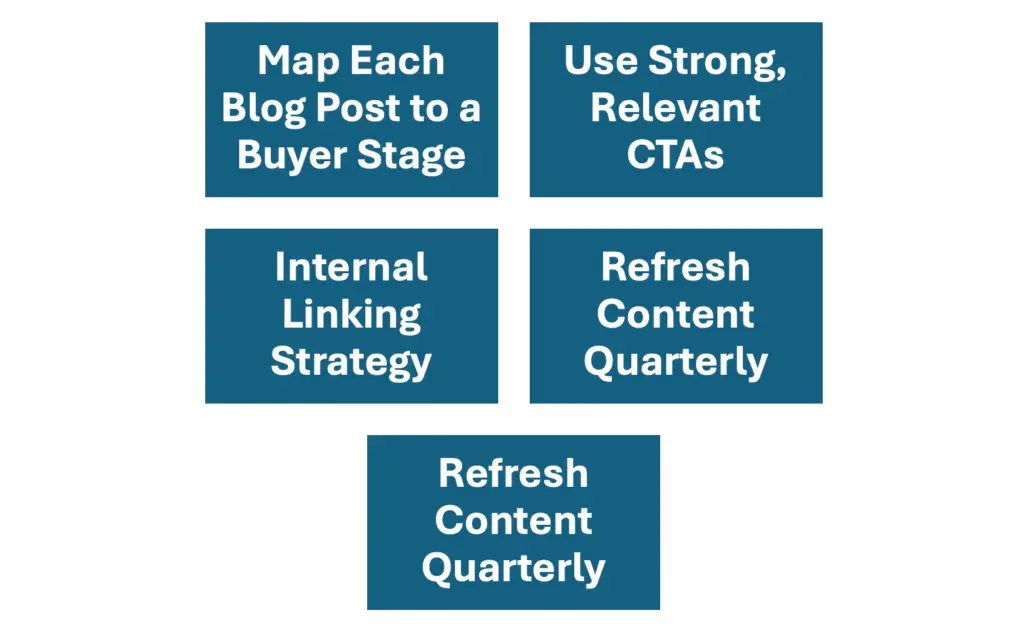
1. Map Each Blog Post to a Buyer Stage
Not all blog content serves the same purpose. Use awareness-stage posts to build traffic, consideration-stage posts to educate, and decision-stage posts to drive conversions. Align CTAs accordingly.
2. Use Strong, Relevant CTAs
Every blog should include at least one clear call to action. Whether it’s downloading a lead magnet, booking a call, or signing up for a newsletter, make sure the CTA matches the reader’s intent and stage in the journey.
3. Internal Linking Strategy
Link blog posts to relevant service pages, case studies, or other high-value blogs. This improves SEO, keeps users on your site longer, and increases conversion opportunities.
4. Refresh Content Quarterly
Updating content every 3–6 months keeps it relevant and can boost rankings. Refresh stats, refine messaging, and test new visuals or CTAs.
5.Refresh Content Quarterly
Test headlines, CTA placements, blog length, and visuals. Track what’s working and replicate those patterns across future posts.
Hypothetical Client Example: Turning a Blog Into a Lead Machine
Client: EcoSoft Interiors – A boutique B2B interior design firm specializing in healthcare spaces.
Challenge: Despite publishing content consistently for over two years, the client wasn’t seeing any leads from their blog. Traffic was steady, but conversions were nonexistent. They didn’t have a lead magnet, and their CTAs were vague or buried at the bottom of posts.
What We Did:
- Conducted a content audit and identified the top 10 posts with the most traffic.
- Rewrote intro paragraphs to hook the reader and align with SEO intent.
- Created a gated lead magnet—“Designing Healing Spaces: A Healthcare Office Guide.”
- Integrated inline CTAs at the 25%, 50%, and 75% scroll depth marks.
- Connected blog forms to HubSpot and used UTM tracking to attribute leads properly.
The Results: Within 6 months, EcoSoft saw a 340% increase in qualified leads and closed over $45,000 in new business directly traced back to their blog funnel. One blog post alone ranked #1 for “eco-friendly healthcare design” and accounted for 38% of total conversions.
FAQs: Measuring Blog ROI (Voice-Search Optimised)
Q: What’s the fastest way to measure blog ROI?
A: Use Google Analytics to track traffic and conversions, then subtract your content costs. The formula is: (Revenue – Cost) / Cost = ROI.
Q: Which metrics matter most?
A: Focus on conversion rate, time on page, lead magnet downloads, keyword rankings, and assisted conversions.
Q: Do I need a fancy dashboard to track ROI?
A: Not at all. A simple spreadsheet or free tool like Databox or Google Data Studio works great for most SMBs.
Q: Can a blog really drive leads for my business?
A: Absolutely. With strong CTAs, good SEO, and proper tracking, your blog can become a lead-generation machine.
Q: Should I track assisted conversions?
A: Yes. Blog content often plays a role earlier in the funnel and should be credited accordingly.
Key Takeaways
- Measure what matters—conversions, not just clicks.
- Segment your traffic and track blog-specific performance.
- Use CTAs, lead magnets, and CRM attribution to prove ROI.
- Update old content and test frequently to stay competitive.
Stop Guessing—Start Measuring Your Blog’s True ROI
It’s time to stop spinning your wheels with content that “might” work. With the right metrics in place, your blog becomes a revenue-generating asset—not just a traffic source.
Related reading
- Comprehensive Guide to Content Marketing: Win
- Social Media Brand Engagement 10 Underused Fea
- AI Will Transform Your Social Media Strategy i
- Harnessing the Power of Video Marketing in 202
Ready to put this into action?
If you’d rather have a team that does this every day, we’re here. Book a free 20-minute consult and we’ll give you the three highest-impact next steps for your business — no obligation.