
TL;DR: Local SEO isn’t a fight with national brands — it’s a fight with the shop across the street, and the right keyword tools are how you win it. The post ranks seven options for 2025, from free starters like Google Keyword Planner and Google Trends to BrightLocal’s Local Search Grid, each suited to a different budget and job. The shift that matters: stop chasing broad terms like “coffee shop” and target the local, high-intent phrases that land you in the 3-pack.
Still invisible on Google for local searches? You’re not alone. Most small and midsize businesses waste hours chasing keywords with zero local relevance. But if you want to dominate your ZIP code in 2025, you need better tools—and better strategy.
Why Local Keyword Research Tools Are a Must-Have in 2025
In the battle for visibility, small businesses aren’t competing with national brands—they’re competing with the shop across the street.
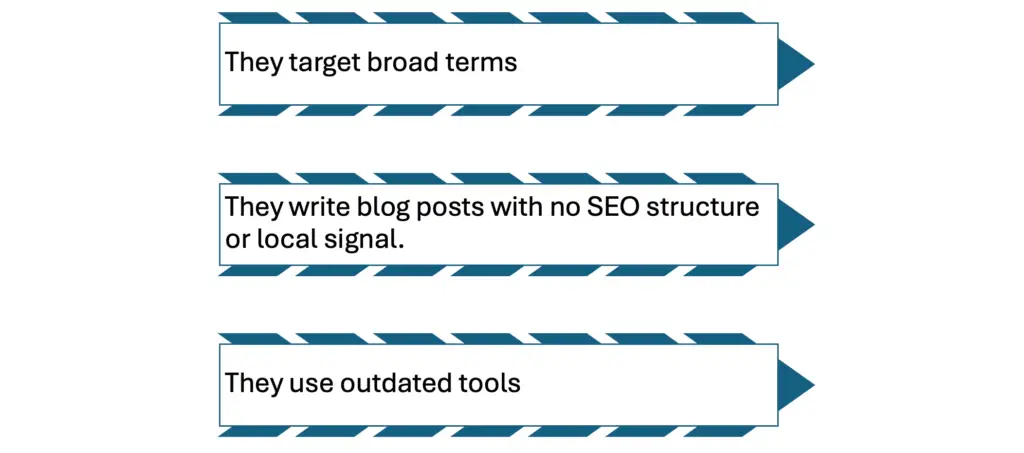
- They target broad terms like “coffee shop” instead of “coffee shop in Boise open late.”
- They write blog posts with no SEO structure or local signal.
- They use outdated tools (or none at all).
To rank in the local 3-pack and drive high-converting traffic, you need local keyword research tools built for 2025—especially if you’re working with a lean team and limited time.
The 7 Best Local Keyword Research Tools for SMBs in 2025
1. Google Keyword Planner (Free)
Best for: Entry-level research and Google Ads keyword ideas
- Filters results by specific cities, regions, or ZIP codes
- Provides monthly search volume and suggested bid ranges
- Syncs with Google Ads and your Google Business Profile
Pro Tip: Use the “Start with a website” feature to discover competitor keyword gaps.
2. Google Trends (Free)
Best for: Spotting local and seasonal search trends
Example: “Pool cleaning Sacramento” sees a 4X spike every April–June.
3. Ubersuggest (Free limited / $29/mo)
Best for: Budget-friendly competitive research
- Local keyword suggestions
- SEO difficulty scores
- Top-ranking pages
4. BrightLocal Local Search Grid (From $39/mo)
Best for: Visualizing local rankings block-by-block
This tool creates a geographic heatmap showing where you rank in each ZIP code or neighborhood. Ideal for:
- Multi-location businesses
- Service area businesses (plumbers, cleaners, HVAC)
- Franchisees managing multiple locations
5. AnswerThePublic (Freemium)
Best for: Local blog content and FAQ ideas
Type your service + city to get dozens of voice-style, real-world questions. Example: “best dog trainer near me in Asheville.”
Strategy Tip: Use these questions as blog titles or FAQ sections for rich snippet wins.
6. Semrush Local SEO Toolkit (Pro: $129.95/mo)
Best for: All-in-one local visibility management
- Tracks keyword rankings by ZIP code
- Auto-syncs listings to Yelp, Apple Maps, Google, Bing
- Includes keyword tracking, competitive insights, and citation monitoring
7. KWFinder by Mangools (From $29.90/mo)
Best for: Visual interface and real keyword difficulty scoring
Use city-level filtering to find long-tail phrases your competitors are missing.
How to Turn Keywords Into Local Leads
Step 1: Define Hyper-Local Areas
Focus beyond just the city—think neighborhoods, landmarks, school zones, etc.
Step 2: Use 2–3 Tools to Build Your List
| Tool | Use Case |
|---|---|
| Google Keyword Planner | Volume + CPC insights |
| KWFinder | Difficulty scoring + ideas |
| BrightLocal | Heatmap of local rankings |
Step 3: Prioritize Buying Intent
| Keyword | Volume | Intent |
|---|---|---|
| emergency plumber San Diego | High | Transactional |
| plumbing tips San Diego | Medium | Informational |
| cheap plumber La Mesa | Low | Price shopper |
Step 4: Optimise These 3 Assets
- Google Business Profile — Add local terms in the business description and Posts.
- Website Service Pages — Use “City + Service” structure (e.g., /boise-window-cleaning).
- Blog Content — Answer the questions you find via AnswerThePublic and KWFinder.
Hypothetical SMB Success Story: HVAC in Tulsa
One HVAC company was stuck on page 4 for “air conditioner repair Tulsa.”
- We used Ubersuggest and Google Trends to find “emergency AC repair Tulsa”.
- Built a service page, updated GBP, collected reviews using that phrase.
- Result: Map Pack ranking in 6 weeks and 57% call increase.
Common Local Keyword Mistakes
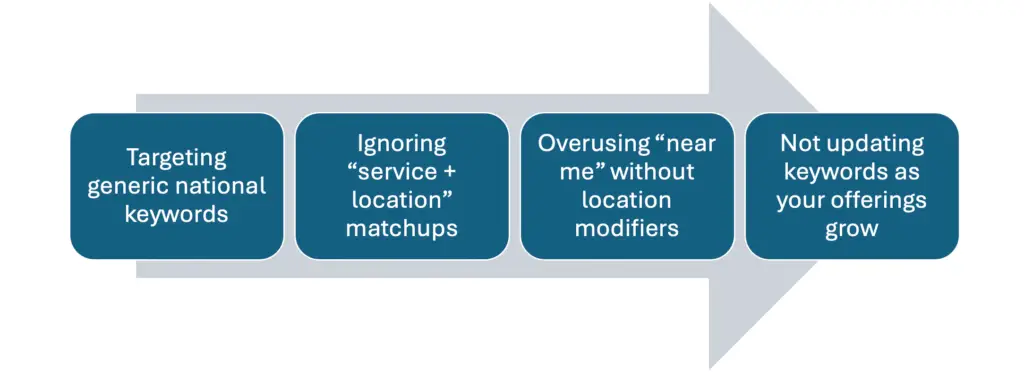
- Targeting generic national keywords
- Ignoring “service + location” matchups
- Overusing “near me” without location modifiers
- Not updating keywords as your offerings grow
Best Practices for 2025
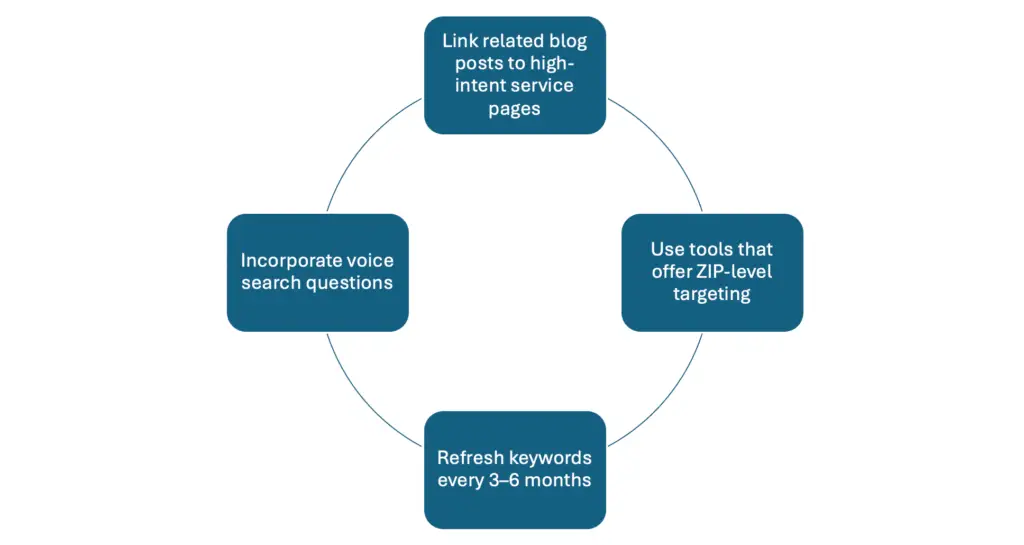
- Refresh keywords every 3–6 months
- Use tools that offer ZIP-level targeting
- Incorporate voice search questions
- Link related blog posts to high-intent service pages
FAQ: Snippet-Friendly Answers
- Q: What’s the best free local keyword tool?
- A: Google Keyword Planner is the most accurate free tool for local intent keyword data.
- Q: How often should I update my local keyword list?
- A: Every 3–6 months or when expanding into a new location or service.
- Q: Can I do this without hiring an SEO agency?
- A: Yes—but working with a local SEO pro like Watts Digital accelerates results and avoids costly mistakes.
Best Local Keyword Tools by Industry
Medical Clinics & Dentists
- Use KWFinder for terms like “same-day dentist + [city]”
- BrightLocal tracks local position changes
- Prioritize emergency and insurance-related queries
Home Services (HVAC, Electricians, Plumbers)
- Ubersuggest uncovers “24/7” and geo-modified terms
- AnswerThePublic identifies useful blog topics for DIY vs. pro comparisons
Restaurants & Cafés
- Use Google Trends to track dishes and dining preferences
- Target terms like “open late,” “outdoor seating,” “pet friendly”
Legal Services
- Semrush excels at tracking keywords like “DUI lawyer + city”
- Use CPC data to evaluate lead value
Tool Comparison Table
| Tool | Free | Geo Targeting | Best For | SMB Type |
|---|---|---|---|---|
| Google Keyword Planner | ✅ | ✅ | Search volume | General |
| Google Trends | ✅ | ✅ | Seasonal content | Food/Retail |
| Ubersuggest | ✅ (limited) | ✅ | Competitive data | Freelancers |
| BrightLocal | ❌ | ✅ | Map Pack visibility | Trades & Local Pros |
| AnswerThePublic | ✅ (limited) | ❌ | Content ideation | Writers & Bloggers |
| Semrush | ❌ | ✅ | All-in-one tracking | Agencies |
| KWFinder | ❌ | ✅ | Ease of use + difficulty metrics | Service SMBs |
What’s Next? Your 30-Day Action Plan
- Week 1: Set up Google Keyword Planner, Ubersuggest, and Google Trends. Identify 3 neighborhoods or service areas.
- Week 2: Pull keywords using KWFinder. Build a prioritized keyword list (volume + intent).
- Week 3: Add new keywords to your website and GBP. Publish 1 blog post targeting your #1 opportunity.
- Week 4: Track impressions and rankings using GSC + BrightLocal. Repurpose content across GBP and social.
Related reading
- Local SEO for Small Businesses: A 2026 Step-by
- How to Optimise Your Google Business Profile f
- Google Ads landing page best practices for Sou
- Google Ads Agency in South Africa | ROI-Focuse
Ready to put this into action?
If you’d rather have a team that does this every day, we’re here. Book a free 20-minute consult and we’ll give you the three highest-impact next steps for your business — no obligation.