
TL;DR
- Ecommerce conversion rate optimisation is about removing friction and doubt — not tricking people into buying.
- Small, tested changes to trust, speed, and clarity often outperform expensive redesigns.
- Measure one hypothesis at a time, honour the psychology of the buyer, and let the data settle the argument.
What’s in this guide
- What is ecommerce conversion rate optimisation?
- Why do shoppers abandon their carts?
- What are the fastest CRO wins?
- The psychology that moves a buyer
- How do you test changes properly?
- Which metrics actually matter?
- Key takeaways
- Frequently asked questions
Ecommerce conversion rate optimisation is the quiet difference between a store that hums and one that haemorrhages traffic. I watched it happen once, in real time. A Cape Town client stood over my shoulder as we shifted a single line of copy above the buy button — and the orders started ticking up before we’d finished our coffee.
Nothing changed about the product. Nothing changed about the price. What changed was the friction — and the fear.
Most store owners chase more traffic when the leak is in the bucket, not the tap. In this guide I’ll show you how to plug that leak, using the psychology of decision-making and the discipline of testing. Story first. Concept second.
What is ecommerce conversion rate optimisation?
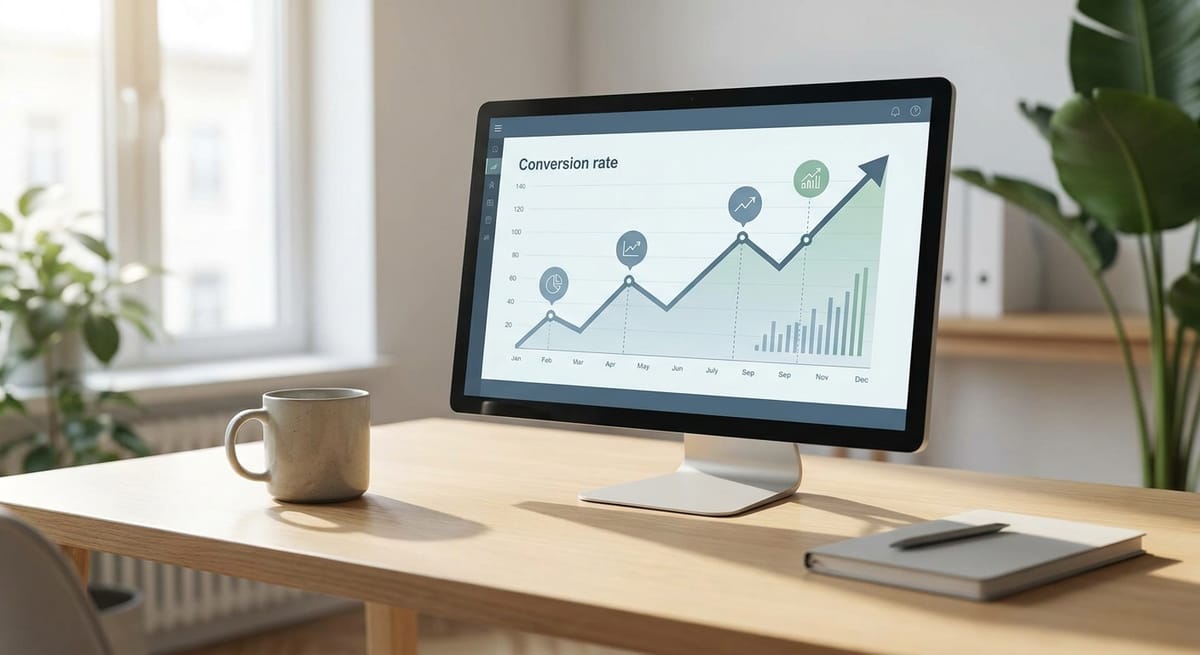
Ecommerce conversion rate optimisation is the systematic practice of increasing the percentage of your visitors who complete a desired action — usually a purchase — without needing more traffic. It turns the people you already have into the people who buy.
The maths is disarmingly simple. Divide your orders by your visitors, multiply by a hundred, and you have your conversion rate. According to the IRP Commerce market data (2024), average ecommerce conversion rates typically sit between 1% and 3%, though it swings by sector and season.
Here’s the part most people miss. A jump from 1.5% to 2.5% doesn’t add two-thirds more revenue — it adds roughly 67% more orders from the exact same ad spend. That’s the leverage hiding in plain sight, and it’s why serious ecommerce conversion rate optimisation pays for itself faster than another Meta campaign.
Why do shoppers abandon their carts for ecommerce conversion rate optimisation?
Shoppers abandon carts because friction and doubt outweigh desire at the moment of decision. The intent was there — the checkout got in the way.
The Baymard Institute (2024) puts the average documented cart abandonment rate at around 70%. Seven in ten people who add to cart walk away. Let that sink in.
The reasons are remarkably consistent across markets, and they cluster into a few honest human objections:
- Unexpected costs — shipping, tax, or fees revealed too late. In South Africa, delivery charges to outlying areas can shock a buyer at the final step.
- Forced account creation — you asked for a relationship before you’d earned a rand.
- A slow or clunky checkout — every extra field is a small invitation to leave.
- Payment friction — no local options like instant EFT, Ozow, or SnapScan.
- Trust anxiety — no reviews, no returns policy, no reassurance that a real business sits behind the screen.
Notice the pattern. Almost none of these are about the product. They’re about the experience — and experience is something you can fix this week.
What are the fastest CRO wins?
The fastest wins remove cost surprises, speed up the page, and add visible proof of trust. These three levers move the needle before you touch anything clever.
Let me give you the order I’d tackle them in, drawn from years of doing this for real stores rather than theorising about it.
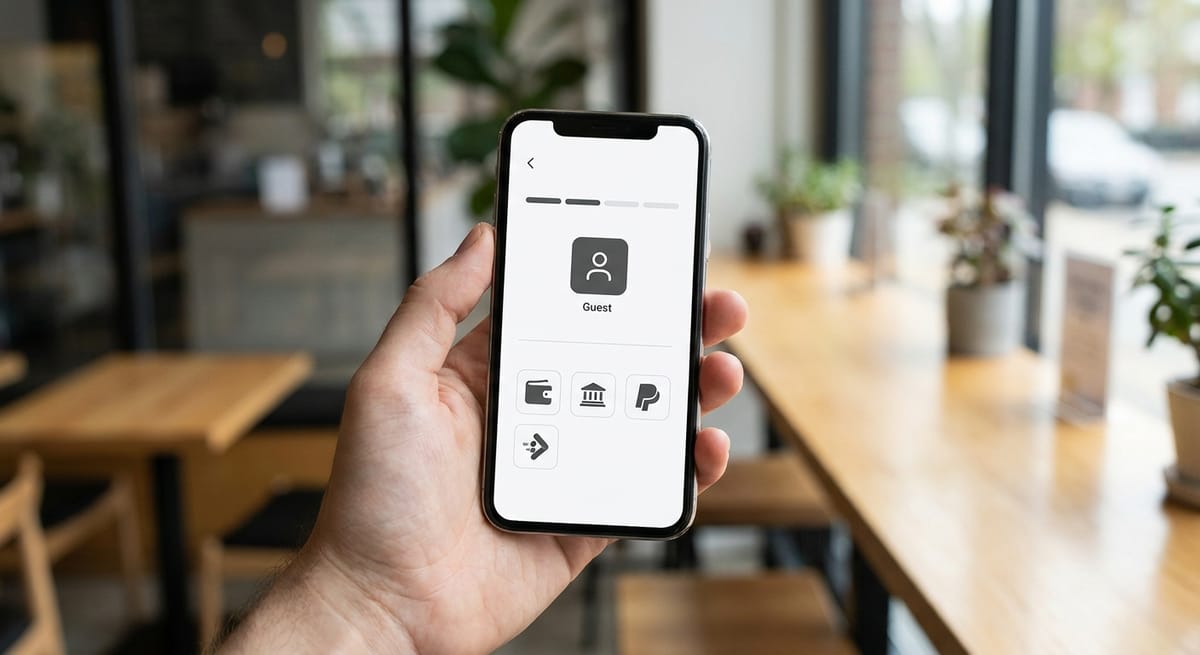
- Show total costs early. Display shipping thresholds and fees on the product page, not the final checkout screen. Surprise is the enemy of trust.
- Cut checkout to fewer steps. Offer guest checkout. Autofill where you can. Every field you remove is friction you delete.
- Speed up your pages. Google’s Core Web Vitals (2024) guidance links slow loads to lost conversions. Compress images. Kill bloated plugins.
- Add local payment methods. For South African buyers, instant EFT and Ozow can lift completion rates markedly.
- Make trust visible. Reviews, a plain returns policy, secure-payment badges, and a real contact number.
None of these need a designer or a developer with a six-week runway. They need a Tuesday afternoon and the willingness to see your store through a stranger’s eyes. If you want a hand mapping these, our conversion-focused web design services start exactly here.
The psychology that moves a buyer
Buyers act when perceived value feels higher than perceived risk — and psychology tips that scale far more than a discount ever will. Reduce the fear, and you rarely need to cut the price.
Robert Cialdini spent decades cataloguing the levers of influence, and three of them earn their keep in ecommerce every single day.
Social proof
We look to others to decide what’s safe. A product with 340 reviews outsells an identical product with none, even at a higher price. Show the numbers. Show the faces. Show the messy, specific, believable details — vague five-star fluff persuades no one.
Scarcity and urgency
“Only 3 left in stock” works because loss looms larger than gain in the human mind. But use it honestly. A fake countdown timer is a short-term trick that torches long-term trust — and buyers can smell it.
Reciprocity and reassurance
Give before you ask. A genuinely useful buying guide, a free size consultation, a generous returns policy — these lower the wall between browsing and buying. A strong product page answers the buyer’s silent questions before they even surface. This is the heart of good ecommerce conversion rate optimisation: you’re not manipulating anyone. You’re making a confident yes easier to reach.
How do you test changes properly?
You test changes with a single hypothesis, a control, and enough traffic to trust the result. Guessing feels productive; testing makes you money.
The cardinal sin is changing five things at once, watching sales rise, and having no idea which change did the work. Discipline beats enthusiasm here.
A clean A/B test follows a simple rhythm:
- Form a hypothesis. “If I add trust badges near the buy button, checkout completions will rise, because payment anxiety is a known drop-off point.”
- Change one variable. Version A stays as-is; version B carries the badges. Nothing else moves.
- Split traffic evenly and let it run until you reach statistical significance — usually a few hundred conversions per variant, not a few dozen.
- Read the result honestly. If B wins, ship it. If it doesn’t, you’ve still learned something true.
Tools like Google Optimize alternatives — VWO, Convert, or built-in Shopify testing — handle the plumbing. For low-traffic stores, don’t despair: qualitative feedback, session recordings, and short exit surveys can reveal the friction that raw numbers hide.
Which metrics actually matter?
The metrics that matter track the journey from click to purchase, not vanity totals. Traffic without conversion is applause without a sale.
Here’s how the core numbers compare, and what each one is really telling you:
| Metric | What it measures | Healthy signal |
|---|---|---|
| Conversion rate | Visitors who buy | Above 2% (varies by sector) |
| Cart abandonment rate | Carts started but not completed | Below the ~70% average |
| Average order value (AOV) | Revenue per order | Rising over time |
| Add-to-cart rate | Intent to buy | Signals product-page strength |
| Checkout completion rate | Cart to paid order | Reveals checkout friction |
Read these together, not in isolation. A high add-to-cart rate with a low checkout completion rate points a bright arrow at your checkout. A low add-to-cart rate sends you back to your product pages and pricing. The numbers argue among themselves — your job is to listen. Our guide to measuring marketing ROI goes deeper on setting these up correctly.
Key takeaways
- Ecommerce conversion rate optimisation grows revenue from the traffic you already have — the highest-leverage work in your store.
- Cart abandonment is mostly about friction and trust, not price; fix the experience first.
- The fastest wins are transparent costs, faster pages, guest checkout, local payment methods, and visible proof.
- Psychology — social proof, honest scarcity, reciprocity — lowers perceived risk without cutting margin.
- Test one change at a time and wait for statistical significance before you believe a winner.
- Track the full journey — add-to-cart, checkout completion, AOV — not vanity traffic.
Frequently asked questions
What is a good ecommerce conversion rate optimisation benchmark?
Effective ecommerce conversion rate optimisation aims to push you above the 1–3% average most stores sit within, according to IRP Commerce (2024). Anything over 2% is respectable; 3–4% is strong. Benchmarks vary sharply by sector, price point, and traffic source, so treat these as guideposts rather than gospel — and always measure your own trend over time.
How long does CRO take to show results?
Quick wins like transparent shipping costs or guest checkout can shift numbers within days. Proper A/B tests, however, need enough traffic to reach statistical significance — often two to four weeks per test. CRO is a compounding discipline, not a one-off fix; the stores that win treat it as an ongoing habit rather than a single project.
Do I need lots of traffic to do CRO?
No, though high traffic makes formal A/B testing faster and cleaner. Low-traffic stores can lean on qualitative methods — session recordings, exit surveys, and heatmaps — to spot friction. Fixing obvious problems like hidden costs or a slow checkout helps regardless of volume, so start with common-sense improvements before formal split testing.
What payment options matter most for South African stores?
Local buyers expect instant EFT, Ozow, SnapScan, and card payments alongside international options. Offering only credit cards excludes a large share of South African shoppers who prefer bank-linked payments. Adding these methods often lifts checkout completion noticeably, because it removes a genuine barrier rather than merely nudging behaviour.
Is CRO better than spending more on ads?
Often, yes — because CRO improves the return on every rand you already spend on ads. If you double your conversion rate, you effectively halve your cost per acquisition. Ads and CRO work best together: traffic brings people in, and optimisation ensures more of them buy. Fix the leak before you turn up the tap.
The leak in your bucket is costing you more than any campaign ever could. If you’d like a second pair of eyes on your store — and a clear, prioritised list of changes that pay for themselves — book a conversion audit with Watts Digital. No jargon, no obligation, just the friction points that are quietly draining your sales.
Written by David Watts — founder of Watts Digital, storyteller, and student of the psychology behind why people say yes.