
TL;DR: Most SMBs lose sales not because of a weak offer but because they never map the journey their prospects actually take from “who is this?” to “take my money”. User journey mapping is your conversion roadmap: it pinpoints where leads leak, aligns your marketing with real behaviour, and lets you optimise every step. Start with your top one to three buyer personas and their pain points, then build outward from there.
Most SMBs Lose Sales Because They Don’t Map the Journey: user journey mapping,journey mapping
Here’s a harsh truth: your website might be turning away hot leads without you even knowing it. Not because your offer stinks. Not because your ads are off.
But because you’re not meeting users where they are on their journey.
If you want more conversions in 2025, user journey mapping isn’t optional. It’s your conversion roadmap—your guide to understanding the exact steps your prospects take from “Who is this?” to “Take my money.”
And the best part? Once you’ve mapped the journey, you can optimise every step to gently nudge people toward buying.
Why User Journey Mapping is a Must-Have for SMBs in 2025: user journey mapping,journey mapping
Big brands like Amazon and Airbnb invest millions into mapping digital journeys—and it pays off.
But for SMBs, the stakes are even higher. You can’t afford waste, churn, or confusion.
Here’s how journey mapping helps small businesses win:
- Pinpoints conversion leaks (so you stop guessing)
- Aligns your marketing with actual user behaviour
- Personalises content for where users really are in the funnel
- Boosts retention and referrals post-sale
Imagine knowing exactly what your prospect needs at every click, scroll, and interaction. That’s the power of journey mapping.
Step-by-Step: How to Create a High-Converting User Journey Map
Step 1: Identify Your Core Buyer Personas
Start by outlining your top 1–3 customer personas. For each one, answer:
- Who are they? (Job, demographics, goals)
- What are their pain points?
- What motivates them to buy?
- Where do they hang out online?
Example Persona:
“Small Business Sarah” – 42, owns a cleaning business, spends time on Facebook, struggles with generating local leads, wants to grow her team by year-end.
Step 2: Outline the Journey Stages
- Awareness – They discover your brand
- Consideration – They evaluate options
- Decision – They’re close to buying but need assurance
- Purchase – They take the leap
- Post-Purchase – They become loyal or leave
Step 3: Map All Digital & Offline Touchpoints
| Stage | Possible Touchpoints |
|---|---|
| Awareness | Google search, YouTube ad, blog post, podcast mention |
| Consideration | Pricing page, comparison chart, case study, email reply |
| Decision | Sales call, review site, testimonial, guarantee offer |
| Purchase | Checkout UX, thank you page, invoice email |
| Post-Purchase | Onboarding email, support call, satisfaction survey, upsell ad |
Step 4: Identify Goals, Questions, and Frictions at Each Step
Example: Consideration Stage
| Goal | Questions | Friction |
|---|---|---|
| Compare providers | “How are you different?” | Weak CTA or unclear value |
| Evaluate pricing | “Is this worth the cost?” | No pricing page or confusing packages |
Step 5: Use Real Data to Validate the Journey
- Google Analytics – for bounce and exit rates
- Hotjar – for click and scroll maps
- CRM data – to track delays or drop-offs
- Customer interviews – for insights on objections
Step 6: Optimise the Journey for Conversions
- Rewriting landing pages for each stage
- Adding trust-builders (e.g., testimonials, guarantees)
- Using behaviour-based email automation
- Retargeting based on abandoned steps
Quick Wins to Improve Your User Journey Today
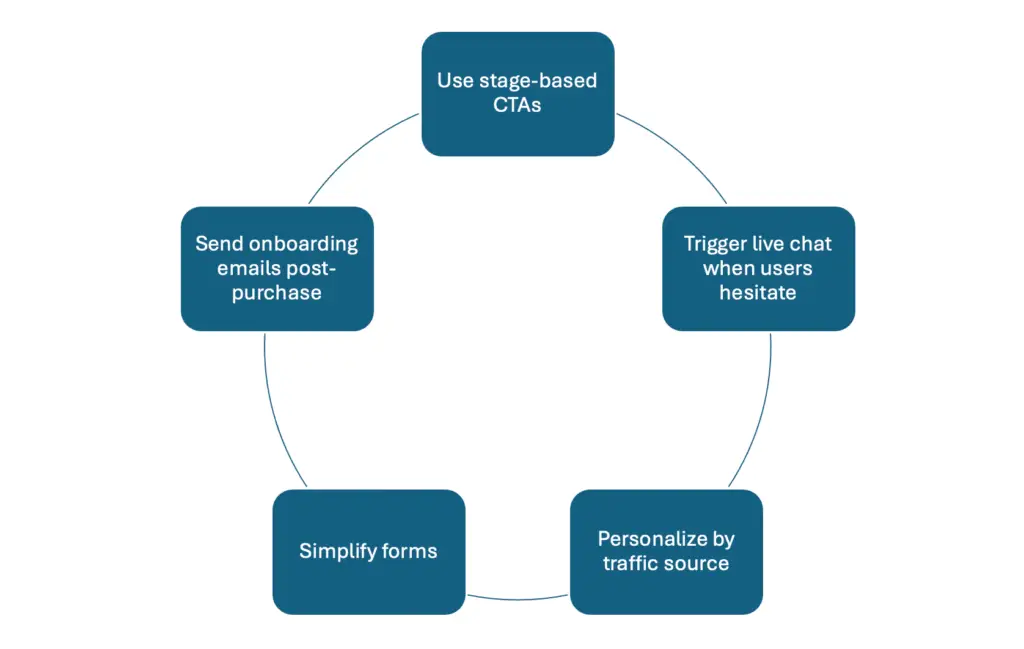
- Use stage-based CTAs
- Trigger live chat when users hesitate
- Personalise by traffic source
- Simplify forms
- Send onboarding emails post-purchase
Avoid These Common Journey Mapping Mistakes
- Mistake 1: Mapping from your POV, not theirs
- Mistake 2: Ignoring post-sale engagement
- Mistake 3: Making it static
- Mistake 4: Forgetting about mobile users

Best Practices for Effective Journey Planning in 2025
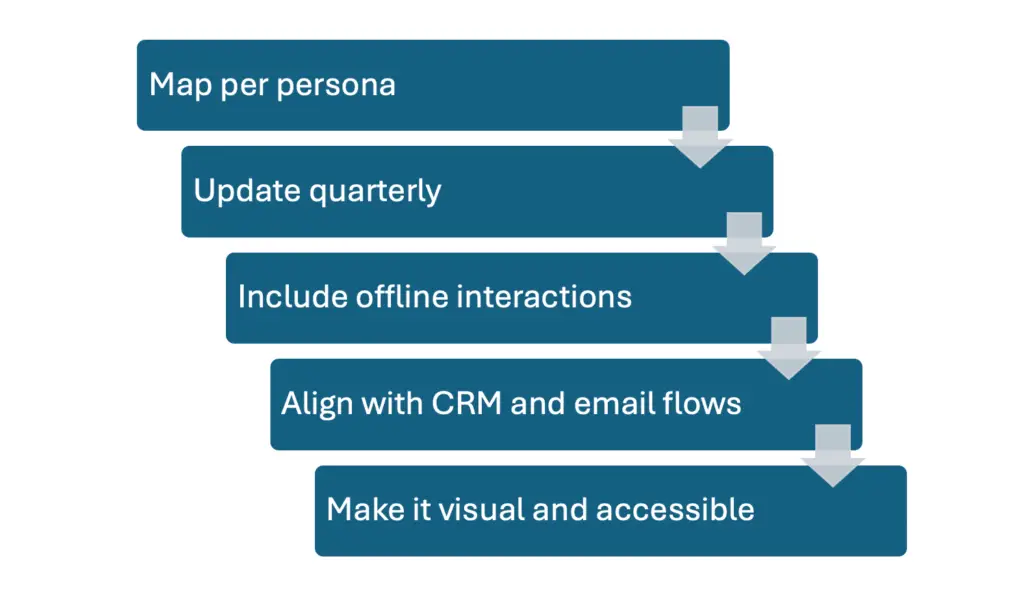
- Map per persona
- Update quarterly
- Include offline interactions
- Align with CRM and email flows
- Make it visual and accessible
Hypothetical Example: Journey Mapping Doubled This Local Business’s Leads
Company: Artisan Cabinet Co.
Industry: Home Improvement
Results within 90 days:
- Lead form submissions doubled
- Average time on site increased by 42%
- Conversion rate improved from 1.3% to 3.7%
FAQ: User Journey Mapping for SMBs
What is user journey mapping?
It’s a visual guide of how customers interact with your brand from discovery to loyalty.
How does it improve conversions?
It helps remove friction and align messaging to what users need at each stage.
How long does it take to build one?
Initial mapping can take 1–2 days. Ongoing refinement is key.
Do I need special tools?
Not necessarily—Google Sheets and a whiteboard work great. Visualization tools help.
Key Takeaways
- Mapping = uncovering hidden conversion barriers
- Personalise and simplify every step
- Use real data, not guesses
Related reading
- High Converting Website Design South Africa: W
- Your Guide to Finding the Right Web Design Par
- Colour Psychology in Web Design 6 Steps To Imp
- Proven Web Design for Lead Generation
Ready to put this into action?
If you’d rather have a team that does this every day, we’re here. Book a free 20-minute consult and we’ll give you the three highest-impact next steps for your business — no obligation.